
Grilled Steak Kabobs with Paleo Pesto
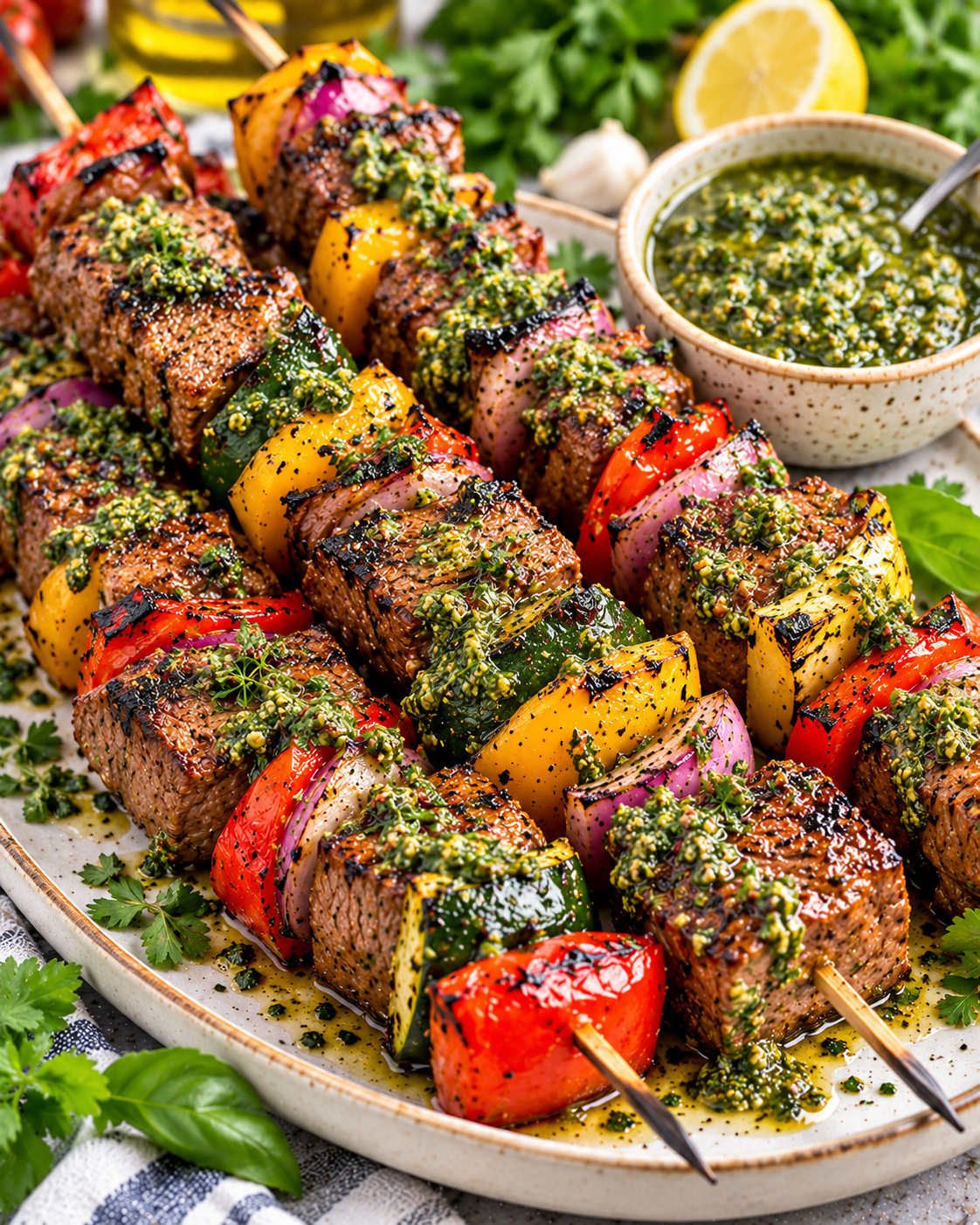
Steak kabobs are one of those dinners that immediately feel like summer. The beef develops a savory grilled flavor, the skewers look inviting on a platter, and the whole meal feels relaxed enough for a weeknight but special enough for company.
These grilled steak kabobs get an extra lift from paleo pesto. The fresh, herb-forward flavor provides a welcome contrast to the richness of the beef, making each bite taste a little brighter.
A good steak kabob recipe should have tender pieces of meat that cook evenly and remain juicy. The pesto should complement the beef without hiding its natural flavor.
Why Steak and Pesto Make Such a Good Pair
Grilled beef has a rich, savory character that works especially well with fresh herbs. Pesto adds an aromatic contrast and can make a simple steak dinner feel more interesting.
The exact flavor depends on the herbs, oil, and other ingredients used in the pesto. For a paleo version, the full ingredient list needs to align with the intended dietary approach.
Choosing Steak for Kabobs
The cut of beef makes a noticeable difference in tenderness. Kabobs work best when the meat can be enjoyed in bite-sized pieces without feeling tough or excessively chewy.
Sirloin Steak
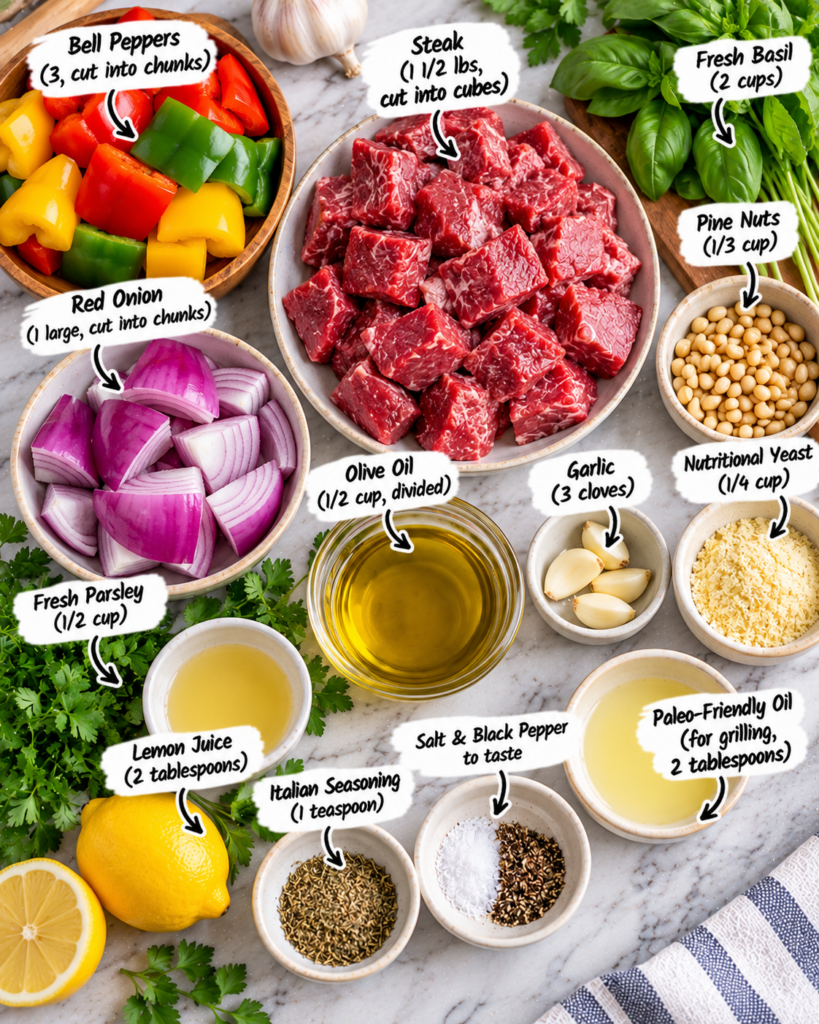
Sirloin is a familiar choice for steak kabobs because it offers a balance of flavor and tenderness. Its texture depends on the specific cut and the quality of the meat.
Other Steak Cuts
Tender cuts such as tenderloin can also work, although they differ in richness and price. Tougher cuts may not produce the same result when prepared as quick-cooking skewers.
The recipe card should determine the actual cut used.
What Makes the Pesto Paleo?
Traditional pesto often contains cheese, which isn’t included in many paleo eating approaches. Paleo-style pesto may omit dairy or use a different formulation.
The label should be supported by the actual ingredients. Nuts, seeds, oils, and seasonings can also vary, and substitutions may affect the texture and flavor.
Pesto Flavor and Texture
A good pesto should taste fresh and aromatic without being excessively oily or bitter. Its consistency should suit how it’s served with the steak.
Some versions are thick enough to cling to the meat, while others have a looser texture.
Getting Tender, Evenly Cooked Kabobs
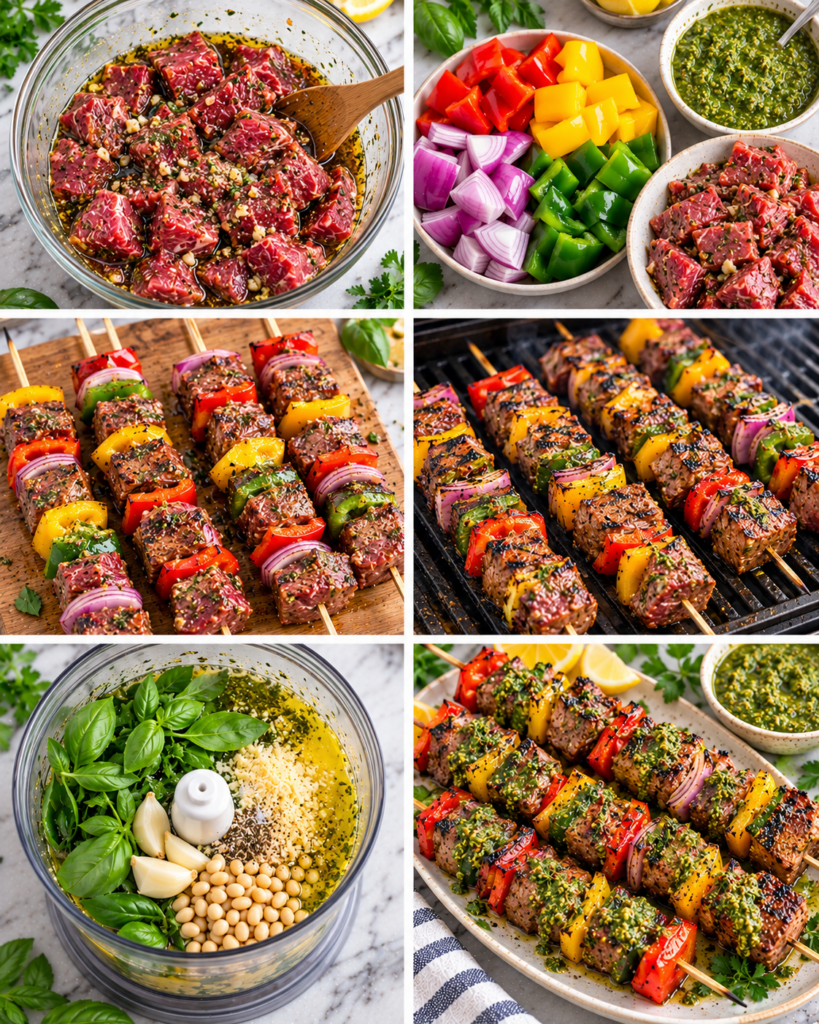
One of the challenges with steak kabobs is that small pieces can cook differently depending on their size. A mixture of very large and very small pieces may create uneven doneness.
Vegetables, when included on the skewers, can also have different cooking characteristics from the beef.
Why Steak Kabobs Become Tough
A tough result may be related to the cut, piece size, or cooking conditions. The best finished kabobs should be easy to chew without feeling dry.
Why Some Pieces Cook Faster
Pieces with different thicknesses respond differently to heat. The same is true of vegetables that may be included on the skewers.
Grill Flavor and Food Safety
Grilling creates a savory exterior that complements the fresh pesto. The goal is a flavorful surface without a dry center.
For whole-muscle beef steak, USDA guidance recommends a minimum internal temperature of 145°F followed by a three-minute rest. Use a food thermometer rather than relying only on appearance.
What to Serve with Grilled Steak Kabobs
A fresh cucumber and tomato salad makes a lovely accompaniment because it balances the richness of the steak. Grilled vegetables are another natural choice.
For a paleo-style meal, roasted sweet potatoes or cauliflower rice can round out the plate. The best side depends on how substantial you want dinner to feel.
Leftovers and Storage
Cooked steak kabobs can be refrigerated for later meals, although the meat may become firmer after chilling. Pesto can also change color or consistency during storage.
Refrigerate promptly at 40°F or below and use within three to four days. Reheat leftovers thoroughly to 165°F.
If the pesto contains ingredients with separate storage requirements, follow the more restrictive guidance.

Frequently Asked Questions About Grilled Steak Kabobs with Paleo Pesto
What Steak Is Best for Kabobs?
Sirloin is a popular choice because it balances flavor and tenderness. Other tender cuts may work, depending on the recipe.
Is Pesto Paleo?
Some versions are, but traditional pesto often contains cheese. Check the actual ingredients before labeling a pesto paleo.
Can Steak Kabobs Be Made Ahead?
Some preparation can be done ahead, but the best finished texture generally comes from freshly cooked steak. Follow the recipe’s food-safety guidance.
Can I Cook Steak Kabobs Without an Outdoor Grill?
Alternative cooking methods exist, but their results differ from grilling. Use a tested adaptation rather than assuming the same cooking conditions apply.
Final Thoughts
Grilled Steak Kabobs with Paleo Pesto bring together two flavors that naturally complement each other. The beef provides hearty, savory richness, while the pesto adds freshness and a welcome herbal contrast.
They’re a lovely choice for a summer dinner, especially with a simple salad and grilled vegetables.