
Dairy-Free Lemon Scones (Easy, Tender Recipe)
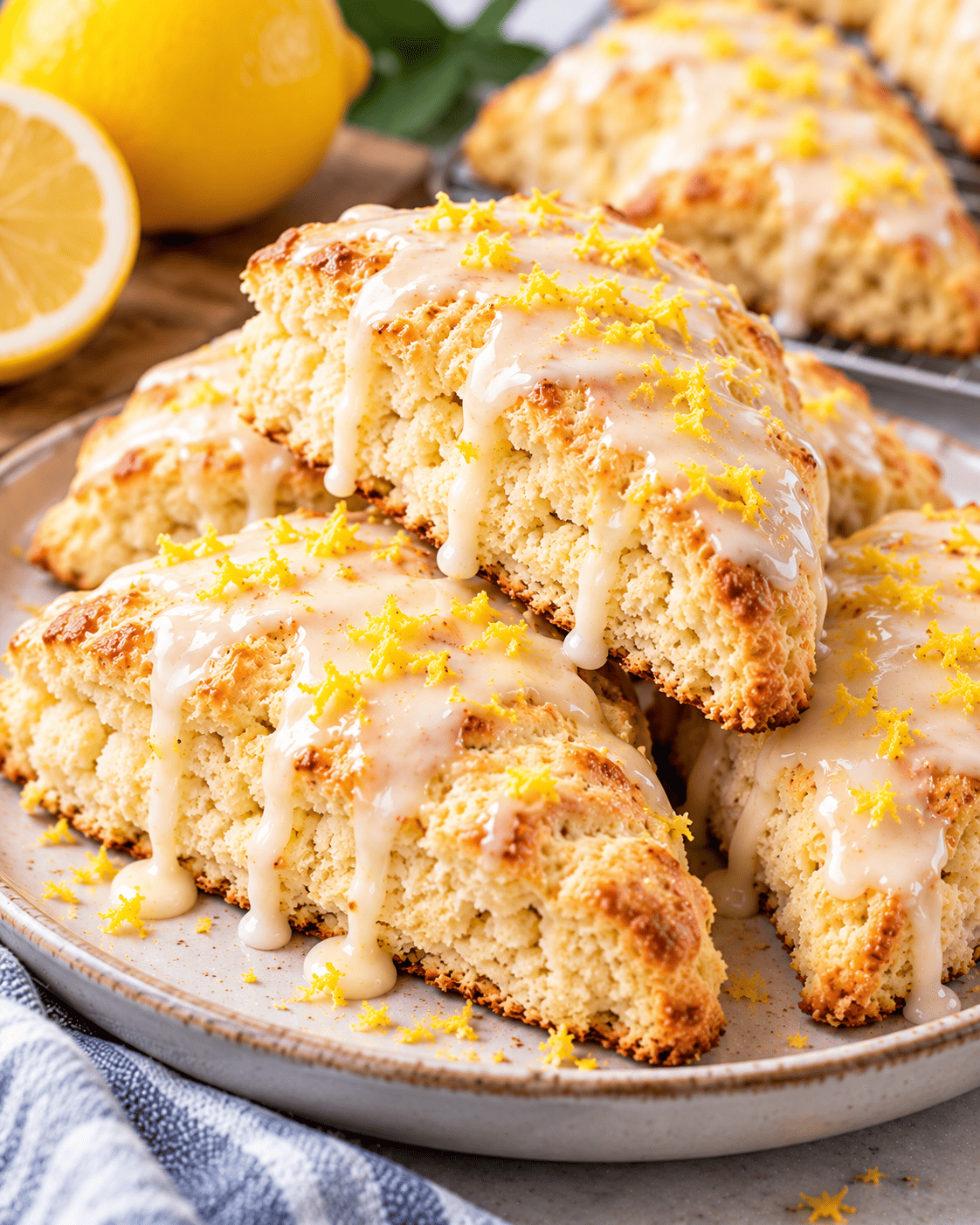
A lemon scone is one of those baked treats that feels equally at home on a breakfast table or beside an afternoon cup of tea. Its bright citrus flavor makes it a refreshing change from richer pastries, while the tender crumb gives it that familiar bakery-style appeal.
These dairy-free lemon scones are intended to deliver that comforting scone texture without relying on traditional dairy ingredients. A good lemon scones recipe should taste distinctly of lemon without becoming sour, bitter, or dry.
The best scones have a delicate interior and enough structure to hold together comfortably. They shouldn’t feel tough or crumbly to the point that they’re difficult to enjoy.
How Dairy-Free Scones Stay Tender
Traditional scones often rely on butter and dairy milk or cream for richness. Dairy-free versions use other ingredients to create a similarly pleasant texture.
The exact result depends on the fat and liquid specified in the recipe. Different plant-based products can behave differently, so substitutions aren’t always interchangeable.
Tenderness Without Dairy
A good dairy-free scone should feel delicate rather than heavy. The crumb may differ slightly from a conventional butter scone, but it should still be satisfying.
Dairy-Free Doesn’t Automatically Mean Vegan
A recipe can be dairy-free while still containing eggs or honey. Only describe these lemon scones as vegan if every ingredient in the actual recipe meets that requirement.
Getting Strong Lemon Flavor
Lemon brings both aroma and acidity to baked goods. The most appealing lemon scones have a bright citrus character without tasting sharp or artificial.
Lemon zest and juice contribute different qualities. Zest is especially aromatic, while juice adds acidity and moisture.
Lemon Zest Versus Lemon Juice
A recipe using zest may have a pronounced lemon aroma without much additional liquid. Juice can contribute a different kind of brightness.
The original recipe should determine which form of lemon is used.
Optional Lemon Glaze
Some lemon scones have a sweet glaze that emphasizes the citrus flavor. Others are served plain, allowing the crumb and lemon aroma to stand out.
A glaze should only be described as part of this recipe if it actually appears in the card.
What Makes a Good Scone Texture?
Scones occupy a space between a biscuit and a sweet pastry. They should feel tender and substantial without becoming dense or bread-like.
A little crumbliness is normal, but the scone should remain cohesive when picked up.
Avoiding Tough Scones
A tough scone loses the delicate texture that makes this style of baking appealing. The finished crumb should break apart pleasantly rather than resist each bite.
Avoiding Dry Scones
Dryness can make lemon flavor seem less vibrant. A good scone should have enough tenderness to remain enjoyable without needing a heavy topping.
Dairy-Free Ingredient Substitutions
Plant-based milk and dairy-free butter alternatives are common in dairy-free baking, but their composition varies. Some contain more water or fat than others.
That difference can affect texture and flavor. Use the original recipe’s tested ingredients rather than assuming any dairy-free product will produce the same result.
What About Gluten-Free Flour?
Dairy-free and gluten-free are separate dietary descriptions. Unless this recipe uses gluten-free ingredients, it shouldn’t be labeled gluten-free.
Troubleshooting Lemon Scones
Scones Spread Too Much
Excessive spreading can change the scones’ shape and texture. The dough’s structure and the recipe’s ingredients influence how well they hold together.
Scones Are Flat
A flatter scone may have a different crumb from the intended result. The recipe’s leavening and overall formulation matter.
Lemon Flavor Tastes Bitter
Lemon peel contains aromatic compounds, but some parts can contribute bitterness. The finished scone should taste bright rather than harsh.
Serving and Pairing Ideas
Lemon scones are particularly good with black tea, herbal tea, or coffee. Their citrus flavor offers a pleasant contrast to a warm drink.
For brunch, they fit nicely alongside fruit and other light breakfast dishes. They’re also attractive on a mixed pastry platter.
Storage and Freezing
Scones generally taste best when fresh because their tender crumb can dry out during storage. Keep fully cooled scones in a suitable covered container.
Many baked scones can be frozen, although the texture may change slightly after thawing. Glazed versions may require extra care because the topping can become sticky.
Follow the recipe’s storage guidance, especially if any topping contains perishable ingredients.
Frequently Asked Questions
Can I Make Lemon Scones Without Butter?
Yes, dairy-free scone recipes can use alternatives to dairy butter. The best choice depends on the recipe’s tested formulation.
Are These Scones Vegan?
Not necessarily. Dairy-free scones may still contain eggs, honey, or other animal-derived ingredients, so check the complete recipe.
Can I Use Bottled Lemon Juice?
Bottled juice may have a different flavor from fresh lemon juice and doesn’t replace zest’s aroma. Use a tested substitution if the recipe allows it.
Can I Freeze Baked Scones?
Many baked scones freeze successfully. Proper packaging helps protect their texture, although freshly baked scones usually have the most delicate crumb.
Final Thoughts
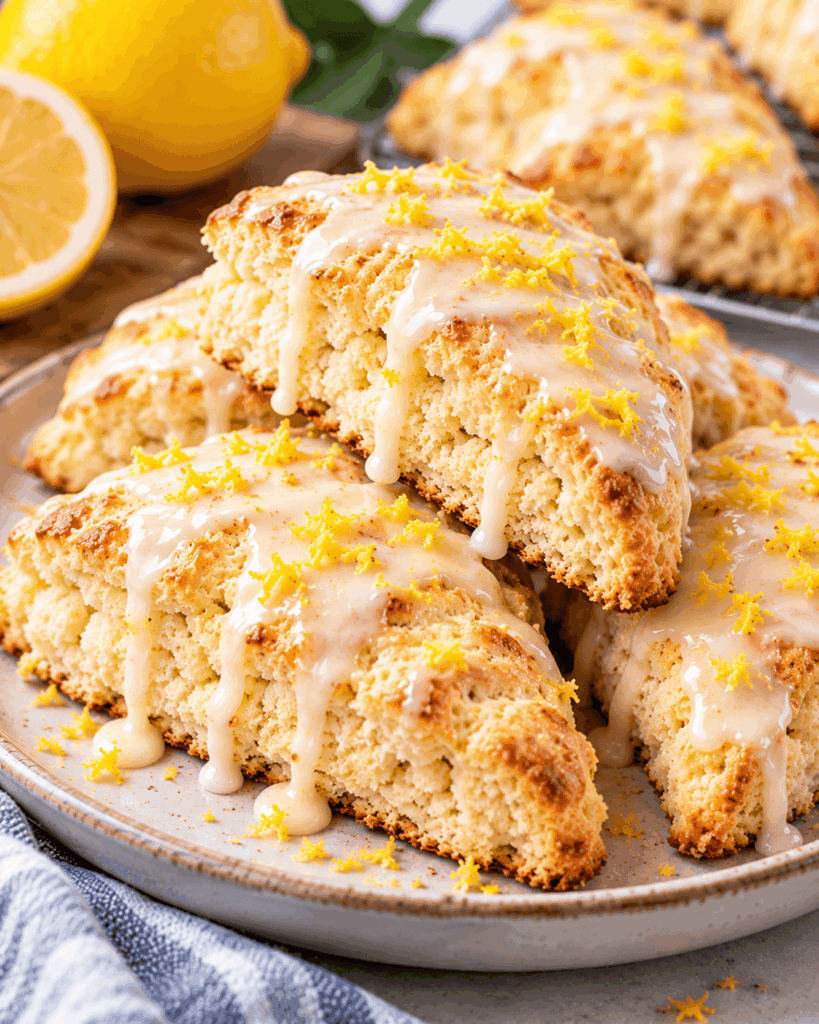
Dairy-Free Lemon Scones are a lovely choice when you want a homemade pastry with a bright, fresh flavor. Their tender crumb and citrus aroma make them especially appealing for breakfast, brunch, or afternoon tea.
The best version tastes clearly of lemon while remaining soft and pleasant to eat, proving that dairy-free baking can still feel like a special treat.
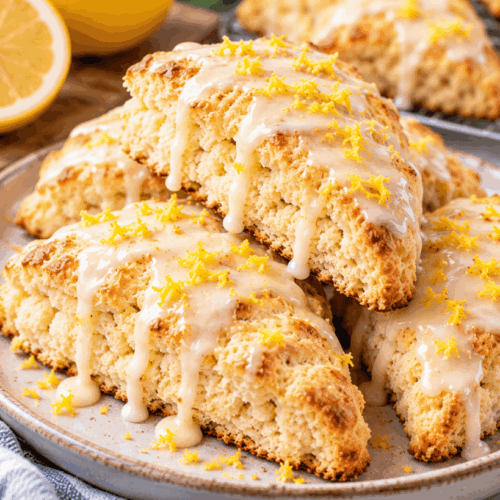
Dairy-Free Lemon Scones Recipe
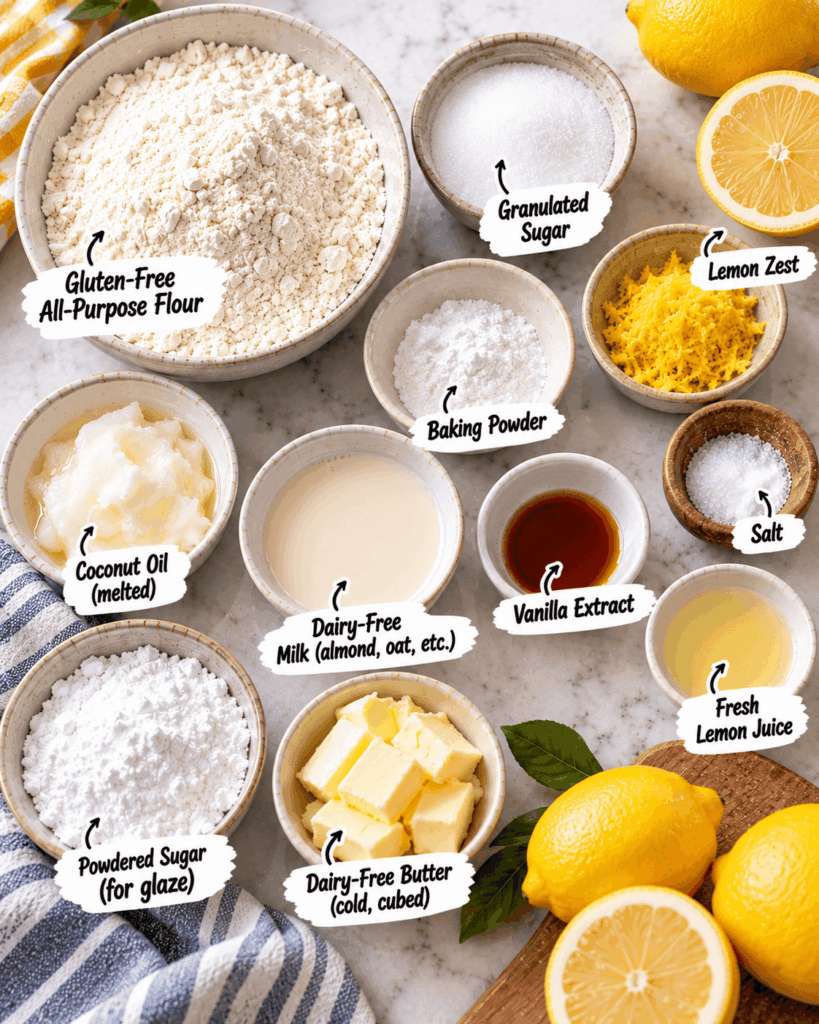
Ingredients
Dry Ingredients
- 2 cups all-purpose flour Use a gluten-free flour if necessary.
- 1 tbsp baking powder
- 1/4 cup granulated sugar Adjust sugar according to your taste.
- 1/2 tsp salt
Wet Ingredients
- 1/4 cup dairy-free butter Melted.
- 1/2 cup plant-based milk Use unsweetened varieties for best results.
- 1 tbsp lemon juice Freshly squeezed is recommended.
- 1 tbsp lemon zest For optimal flavor.
- 1 large egg Optional, for additional richness.
Optional Glaze
- 1 cup powdered sugar Adjust to sweetness preference.
- 2 tbsp lemon juice To thin the glaze.
Instructions
Preparation
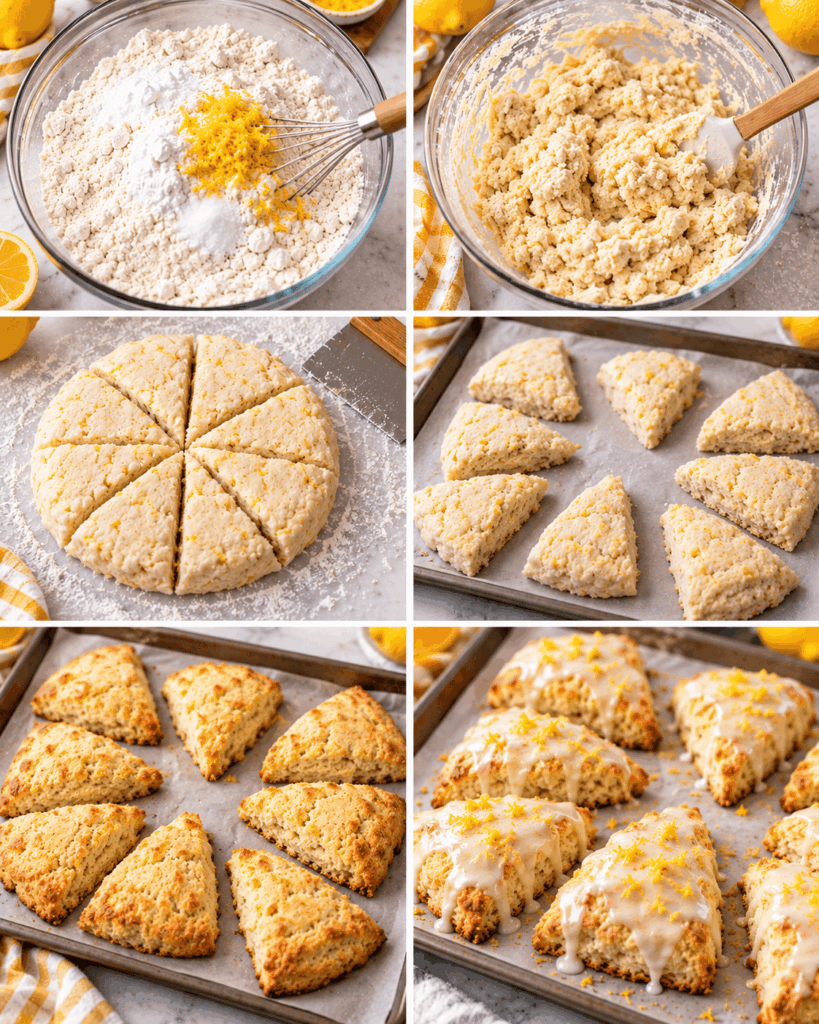
- Preheat the oven to 400°F (200°C) and line a baking sheet with parchment paper.
- In a large bowl, combine the dry ingredients: flour, baking powder, sugar, and salt.
- In another bowl, mix together the wet ingredients: melted dairy-free butter, plant-based milk, lemon juice, lemon zest, and egg if using.
- Pour the wet mixture into the dry ingredients and stir gently until just combined.
Baking
- Turn the dough out onto a floured surface and gently knead it a few times until it comes together.
- Pat the dough into a circle about 1-inch thick and cut into wedges.
- Place the scones on the prepared baking sheet and bake for 20-25 minutes, or until golden brown.
Finishing
- If using the glaze, whisk together powdered sugar and lemon juice and drizzle over cooled scones.