
Homemade Boudin Sausage is one of those recipes I make when I want my kitchen to smell like something cozy and familiar, but I do not want to spend all day stressing. If you have ever stood at the meat counter wondering what boudin even is, or if it is worth the effort, you are in the right place. The first time I tried it, I was shocked by how comforting it tasted, like a bowl of seasoned rice and pork turned into something you can hold in your hand. It is filling, a little spicy (if you want it to be), and perfect for feeding a crowd. I am going to walk you through it in plain language, just like I would if you were hanging out in my kitchen.

What is Boudin?
Boudin is a Cajun style sausage that is usually made with cooked pork, rice, and a mix of seasonings, then stuffed into casings. It is not like a firm hot dog style sausage. It is softer because the filling is already cooked before it gets stuffed, so you are basically warming it up and letting the casing get a little snappy.
Think of it like this: it is part sausage, part savory rice bowl, and somehow it works perfectly. The rice soaks up all the porky, spiced goodness, and when you bite in you get this tender, rich filling that tastes like Louisiana in the best way.
People eat it a bunch of ways. Some folks squeeze the filling onto crackers. Some grill it. Some bake it. My favorite is pan warming it until the casing has a little color, then eating it with mustard and hot sauce nearby.
And if you love sausage dinners in general, you would probably also like this easy weeknight recipe I make when I am short on time: slow cooker Creole chicken and sausage. It has the same cozy vibes, just a different lane.
History of Boudin
Boudin has deep roots in Louisiana, with influences that go back to French sausage making traditions. Over time it became a practical, no waste kind of food. When families butchered a hog, they used as much as they could, and boudin was a smart way to turn cooked meat, bits and pieces, and pantry staples like rice into something filling.
It is also one of those foods that changes depending on who is making it. Some families add liver for a stronger, more old school flavor. Some keep it mild. Some crank up the cayenne and make you reach for a cold drink fast.
I am not here to claim there is only one right way. I am here to say: if it tastes good to you, you did it right. My version is pork forward, nicely seasoned, and not overly complicated, because I actually want you to make it again.
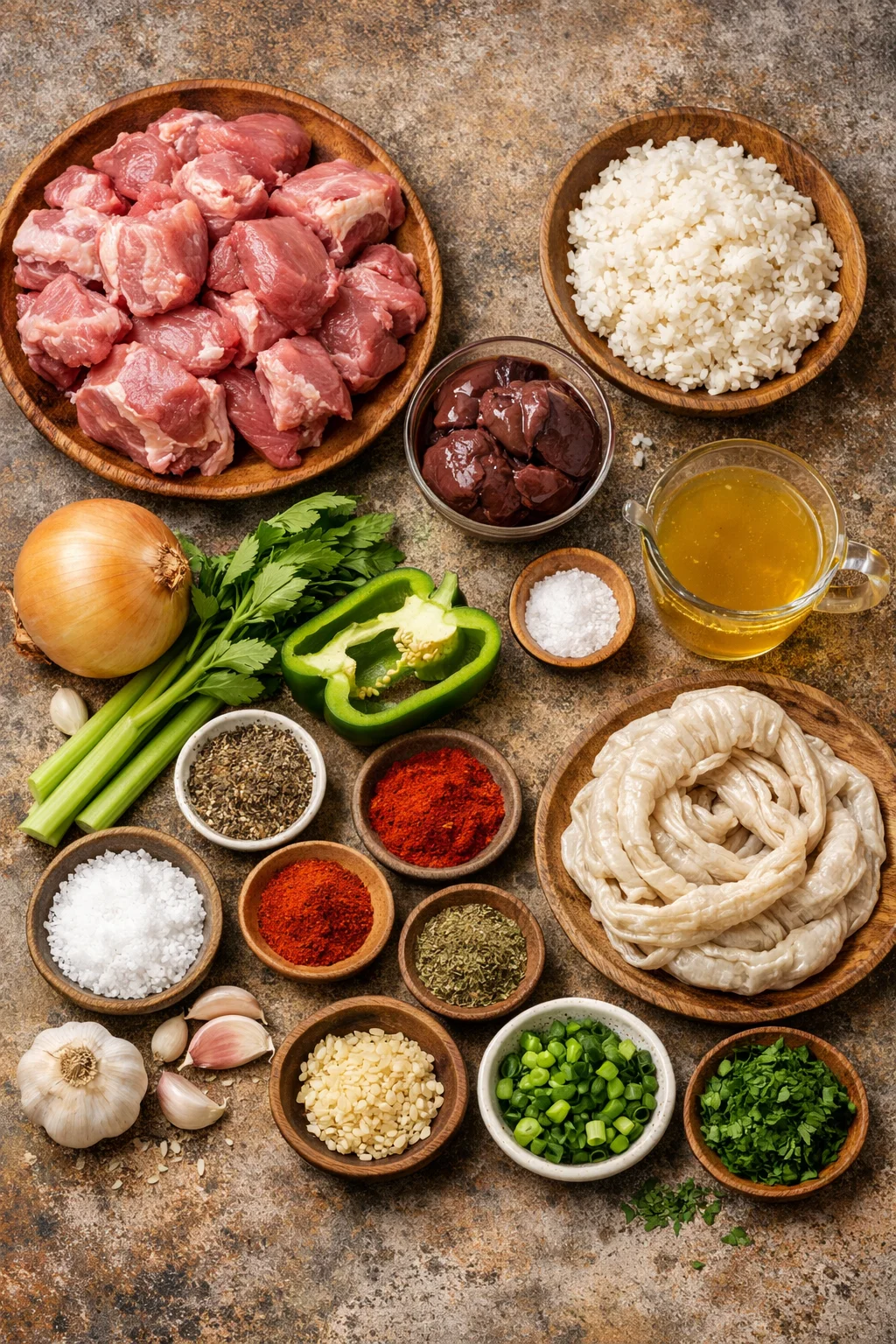
Key Ingredients for Making Boudin
Let us talk ingredients, because this is where a lot of people get intimidated. Do not. You can keep it pretty simple and still get that classic boudin flavor.
My go to ingredient list
- Pork: pork shoulder is the easiest because it stays juicy
- Liver (optional): a little bit adds depth, but you can skip it
- Cooked rice: plain white rice is classic, cooked and cooled
- Onion, celery, bell pepper: the holy trio for Cajun cooking
- Garlic: because it belongs here
- Seasoning: salt, black pepper, cayenne, paprika, and dried thyme
- Green onion and parsley: for freshness at the end
- Stock or cooking liquid: to keep the mixture moist
- Sausage casings: natural hog casings are common, but you can also make it casing free
Quick note on rice: do not use mushy rice. You want it cooked, but not falling apart, because it will get mixed and warmed again later.
Also, do not be afraid to taste and adjust. That is the secret to making Homemade Boudin Sausage that tastes like you meant it, not like you followed a rule book.
When I am in a sausage mood, I also do a super simple meal like this one pot chicken sausage and rice. Different flavor profile, but it hits the same comfort button.
“I tried this boudin method for my first time and it actually worked. The rice stayed fluffy, the seasoning was on point, and my family ate it so fast I barely got a second link.”
Step-by-Step Instructions for Cooking Boudin
This is my relaxed, home kitchen way to do it. I am not trying to be fancy, I am trying to get you delicious boudin that you feel proud of.
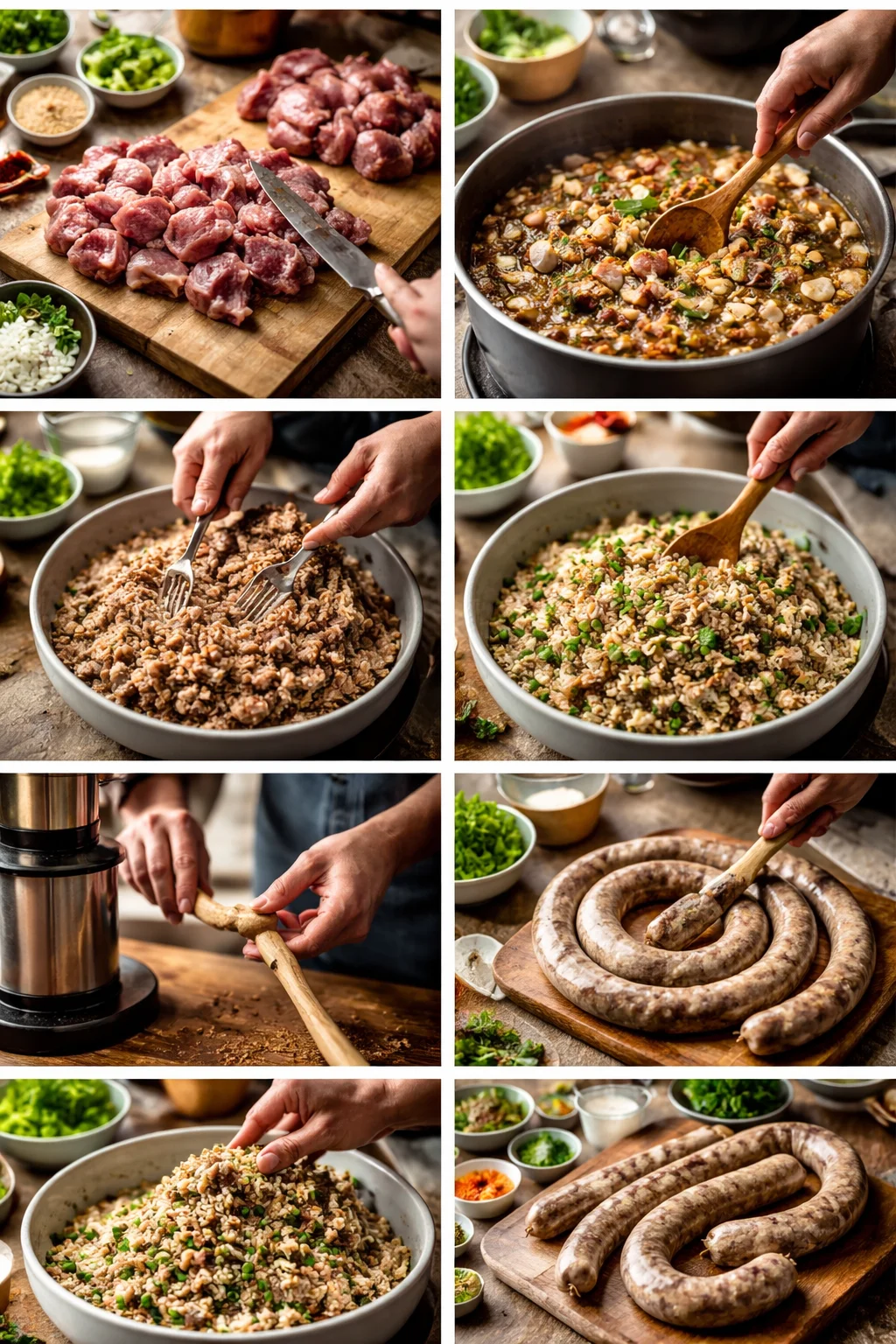
Cook the meat and build flavor
1) Cut pork shoulder into big chunks. If you are using liver, keep it separate because it cooks faster.
2) In a big pot, add pork, onion, celery, bell pepper, garlic, and enough water or stock to cover most of it. Add salt, pepper, paprika, thyme, and a little cayenne.
3) Simmer gently until the pork is tender and easy to pull apart. If using liver, add it for the last 15 to 20 minutes so it does not turn gritty.
4) Scoop out the meat and veggies, but save the cooking liquid. That liquid is gold for moisture and flavor.
Mix the filling
5) Shred the pork. Then run the meat and the cooked veggies through a grinder if you have one. If you do not, pulse in a food processor in short bursts. Do not puree it into baby food. You want a nice, slightly chunky filling.
6) Put the mixture in a big bowl. Add cooked rice, sliced green onion, and parsley.
7) Add some of the reserved cooking liquid a little at a time and stir. You want the filling moist and scoopable, not soupy. This is the moment to taste and adjust salt and spice.
Stuff, then warm to serve
8) If you are using casings, rinse them well and slide them onto a sausage stuffer or the stuffing attachment on your mixer. Stuff gently. Do not pack it too tight or the casings can burst.
9) Twist into links if you want, or leave it as one long coil. At this point everything inside is already cooked, so you are just heating and adding texture.
10) To serve, you can gently poach links in barely simmering water for 10 minutes, then finish in a skillet for a little color. Or bake at 375 F until warmed through. Or grill over medium heat, turning carefully so they do not split.
If you want a quick side situation while the boudin warms up, I love throwing veggies and sausage in the air fryer on busy nights, kind of like this 10 minute air fryer chicken sausage and veggies. Obviously different sausage, but the easy cooking method is a lifesaver.
Once you make Homemade Boudin Sausage once, you will realize the hardest part is just getting started. After that, it is mostly simmer, mix, taste, and stuff.
Tips for Serving and Storing Boudin
Serving boudin is honestly the fun part because you can keep it casual. I usually put it out with mustard, hot sauce, pickles, and maybe some sliced bread. If I am being extra, I will do a simple slaw for crunch.
Here are a few real life tips that keep it from going sideways:
- Do not boil hard: a rolling boil can burst casings. Keep it gentle.
- Moisture matters: if the filling feels dry before stuffing, add more cooking liquid.
- Taste before stuffing: once it is in casings, adjusting seasoning is a pain.
- Chill before storing: let it cool, then refrigerate in a covered container.
Storing: boudin keeps well in the fridge for about 3 to 4 days. For freezing, I wrap links tightly, then freeze in a zip top bag. They reheat best if thawed in the fridge overnight, then warmed gently.
And if you end up with extra sausage and want another cozy idea later in the week, this slow cooker red beans and rice with sausage is a great way to keep the comfort food streak going.

Common Questions
Do I have to use casings?
Nope. You can skip casings and just serve the filling like a savory rice bowl, or form it into patties and pan fry them.
Why did my boudin turn out dry?
Most of the time it is not enough cooking liquid mixed into the filling. Add a bit more reserved broth until it looks moist and spoonable.
Can I make Homemade Boudin Sausage less spicy?
Yes. Start with no cayenne, then add a pinch at a time. You can always add heat, but you cannot take it out.
What is the best way to reheat boudin?
I like a gentle warm up. Either steam or poach lightly, then finish in a skillet. It keeps the casing from exploding and the filling stays soft.
Can I use brown rice?
You can, but the texture will be firmer and a bit nuttier. Traditional boudin is usually white rice, but make it work for you.
A friendly wrap up before you cook
If you have been craving that real Cajun comfort, Homemade Boudin Sausage is totally doable at home with basic ingredients and a little patience. The big keys are tender pork, rice that is not mushy, and enough cooking liquid to keep everything moist. If you want more background and another solid take, I like reading this Boudin (boudain) recipe, a pork and rice Cajun sausage guide, and this one too: How to Make Louisiana Boudin Sausage | Hank Shaw. Now go make a batch, invite someone over, and do not be surprised if you start planning your next one before the first link is even gone.

Homemade Boudin Sausage
Ingredients
For the sausage filling
- 2 pounds Pork shoulder Stay juicy, can substitute with other cuts if needed.
- 0.5 pound Liver (optional) Adds depth of flavor.
- 1 cup Cooked rice Plain white rice, cooked and cooled; avoid mushy rice.
- 1 medium Onion Chopped.
- 2 stalks Celery Chopped.
- 1 medium Bell pepper Chopped.
- 4 cloves Garlic Minced.
- 1 teaspoon Salt To taste.
- 1 teaspoon Black pepper To taste.
- 1 teaspoon Cayenne pepper Adjust based on desired spiciness.
- 1 teaspoon Paprika
- 1 teaspoon Dried thyme
- 2 stalks Green onion Sliced, for freshness.
- 0.5 cup Fresh parsley Chopped, for garnish.
- 4 cups Stock or cooking liquid To keep the mixture moist.
- 1 set Sausage casings Natural hog casings or omit for casing-free option.
Instructions
Cook the meat and build flavor
- Cut pork shoulder into big chunks. If using liver, keep it separate.
- In a big pot, add pork, onion, celery, bell pepper, garlic, and enough water or stock to cover.
- Simmer gently until pork is tender and easy to pull apart, about 1.5 hours. Add liver for the last 15-20 minutes.
- Scoop out the meat and veggies, saving the cooking liquid.
Mix the filling
- Shred the pork and run the meat and cooked veggies through a grinder or pulse in a food processor.
- In a big bowl, combine meat mixture, cooked rice, green onion, and parsley.
- Add reserved cooking liquid a little at a time until the filling is moist and scoopable. Taste and adjust seasoning.
Stuff, then warm to serve
- If using casings, rinse them and slide onto a sausage stuffer. Stuff gently, avoiding tight packing.
- Twist into links or leave as a coil. Cook to add texture.
- Gently poach links in simmering water for 10 minutes, then finish in a skillet, bake at 375°F, or grill medium heat.
