
Paleo Zucchini Bread (Moist and Grain-Free)
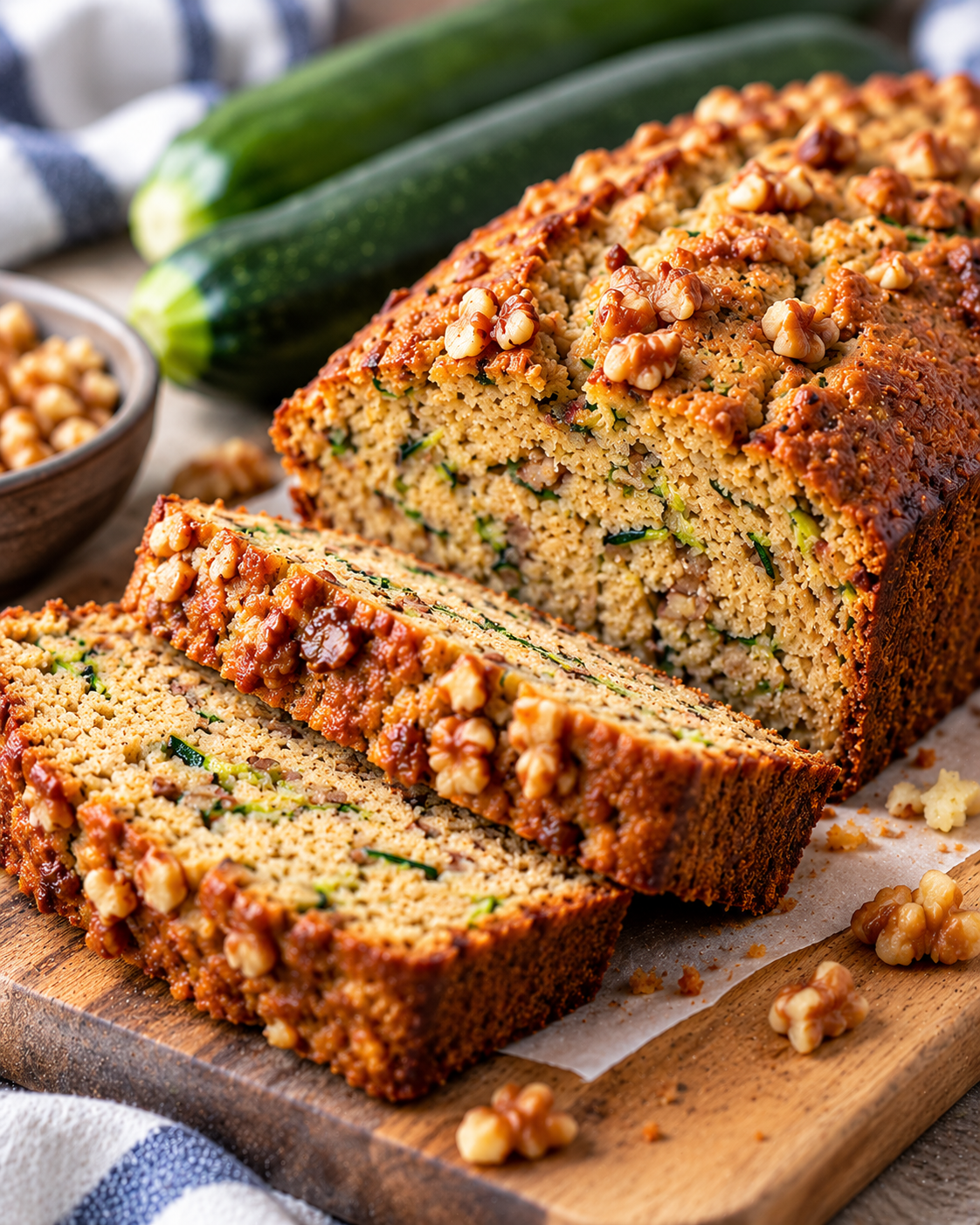
Zucchini bread is one of those baked treats that makes good use of a vegetable without tasting like a vegetable dish. The zucchini brings moisture and a tender texture, while the finished loaf feels right at home beside coffee or tea.
This paleo zucchini bread offers a grain-free take on that familiar homemade favorite. The goal is a moist loaf with a pleasant crumb, not a dense or gummy center that makes slicing difficult.
A good loaf should hold together when cut, taste balanced, and stay tender without feeling wet. That’s especially important in paleo baking, where grain-free flours can behave quite differently from ordinary wheat flour.
Why This Paleo Zucchini Bread Stays Moist
Zucchini contains a substantial amount of water, which can contribute to a soft, moist crumb. That’s part of what makes zucchini bread appealing, but it also creates a challenge when the moisture balance isn’t right.
A well-made loaf should feel tender rather than soggy. The zucchini should support the texture without leaving wet pockets or an underdone center.
Moisture Is Both Helpful and Tricky
Some moisture is essential for a pleasant quick bread. Too little can leave the loaf dry and crumbly, while too much can make it dense or difficult to slice.
The best paleo zucchini bread recipe accounts for the moisture in the vegetable and the absorption characteristics of the flour.
Choosing the Right Zucchini
Zucchini varies in size, firmness, and water content. Smaller, tender zucchini often have a more delicate texture, while very large zucchini may contain larger seeds and more developed interiors.
The vegetable’s condition can affect the finished loaf. Fresh zucchini generally provides a more predictable texture than zucchini that’s become overly soft.
Does Zucchini Need to Be Peeled?
Many zucchini bread recipes use zucchini with the skin intact, but the correct choice depends on the tested recipe. The skin is generally tender in smaller zucchini and contributes little flecks of color.
Peeling changes the appearance and may slightly affect the texture. It shouldn’t be assumed necessary unless the recipe specifies it.
Why Large Zucchini Can Be Different
Overgrown zucchini may have larger seeds and a different moisture distribution. That can make it less predictable in baking.
A recipe designed for ordinary tender zucchini may not produce identical results with a very large garden zucchini.
Paleo Baking Flour Considerations
Grain-free flours don’t behave like wheat flour. They absorb moisture differently and provide different levels of structure, which can make quick breads more delicate.
Almond flour often creates a rich, tender crumb, while coconut flour is notably absorbent. The two aren’t interchangeable in equal amounts.
Almond Flour Zucchini Bread
Almond flour can create a moist, slightly dense loaf with a delicate texture. It is used in many grain-free baking recipes, but it shouldn’t be assumed to be part of this particular bread unless confirmed.
Coconut Flour Zucchini Bread
Coconut flour behaves very differently because it absorbs substantial moisture. Recipes developed for it generally have a different balance from almond-flour recipes.
A direct flour substitution can change the texture dramatically. The original recipe’s flour base should remain the guide.
Tips for Bread That Bakes Through
A good zucchini bread should be tender from edge to center. A loaf that looks browned on the outside but remains wet in the middle can be disappointing.
The bread’s structure depends on moisture, flour type, and the recipe’s baking conditions.
Avoiding a Wet or Gummy Center
Excess moisture can make the middle feel dense and sticky. Grain-free flours may also produce a naturally softer crumb than wheat flour, so texture expectations should be realistic.
The finished loaf should still be cohesive enough to slice without collapsing.
Preventing a Crumbly Loaf
Some grain-free breads are more delicate, particularly while warm. A crumbly loaf may lack the structure expected from the recipe.
The best version holds together comfortably while remaining tender rather than tough.
Understanding the Finished Crumb
Paleo zucchini bread may not have the same springy texture as conventional quick bread. A slightly denser crumb can be normal, depending on the flour used.
That difference shouldn’t be confused with an unpleasantly wet or underdone center.
Flavor Variations
Zucchini bread is versatile enough to work with different flavor profiles. Some versions are warmly spiced, while others include chocolate or nuts.
These additions can create appealing variations, but they also change the loaf’s moisture and texture. The original recipe should determine which options are appropriate.
For a paleo version, any additions must also meet the intended dietary requirements.
Serving Ideas
A slice of zucchini bread works well with morning coffee or afternoon tea. Its mild flavor makes it suitable as a breakfast treat or a simple snack.
Some people prefer it slightly warm, while others enjoy the firmer texture it develops after cooling. The best serving temperature depends on the loaf’s crumb and personal preference.
Storage and Freezing
Moist quick breads can change texture during storage. Keep the loaf covered and follow the recipe’s recommendations for room-temperature or refrigerated storage.
Refrigeration may help preserve quality in warm conditions or when perishable ingredients are present. Many zucchini breads freeze successfully, although the crumb may become slightly softer after thawing.
Proper packaging helps protect the loaf from drying out and absorbing unwanted odors.

Frequently Asked Questions About Paleo Zucchini Bread
Can I Use Almond Flour Instead of Coconut Flour?
Not as a direct equal substitution. Almond flour and coconut flour absorb moisture differently, so a tested recipe is needed for either flour.
Why Is My Zucchini Bread Wet in the Middle?
Zucchini contributes substantial moisture, and the flour base influences how that moisture is absorbed. A wet center can indicate that the loaf hasn’t developed the structure intended by the recipe.
Can I Freeze Paleo Zucchini Bread?
Many grain-free quick breads freeze well when properly packaged. The texture may change slightly after thawing, especially in a particularly moist loaf.
Is Paleo Zucchini Bread Dairy-Free?
Not automatically. The complete ingredient list determines whether the recipe is dairy-free, even when it uses grain-free flour.
Final Thoughts
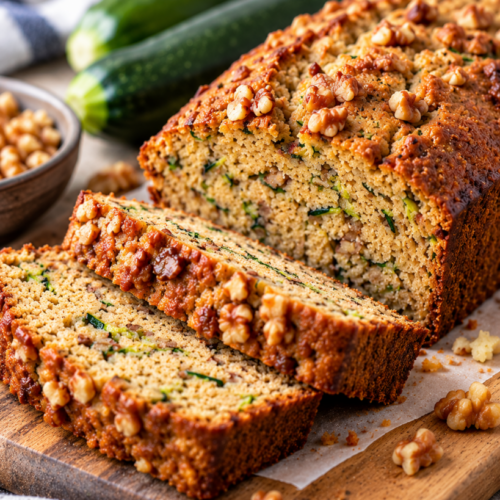
Paleo Zucchini Bread is a comforting way to enjoy a familiar homemade loaf without conventional grain-based flour. Its appeal comes from a moist, tender crumb and the mild flavor of zucchini.
The best version slices neatly, stays pleasantly soft, and doesn’t feel gummy or overly dense. It’s a lovely option for breakfast, snacks, and anyone who enjoys homemade quick breads.
Paleo Zucchini Bread
Ingredients
Wet Ingredients
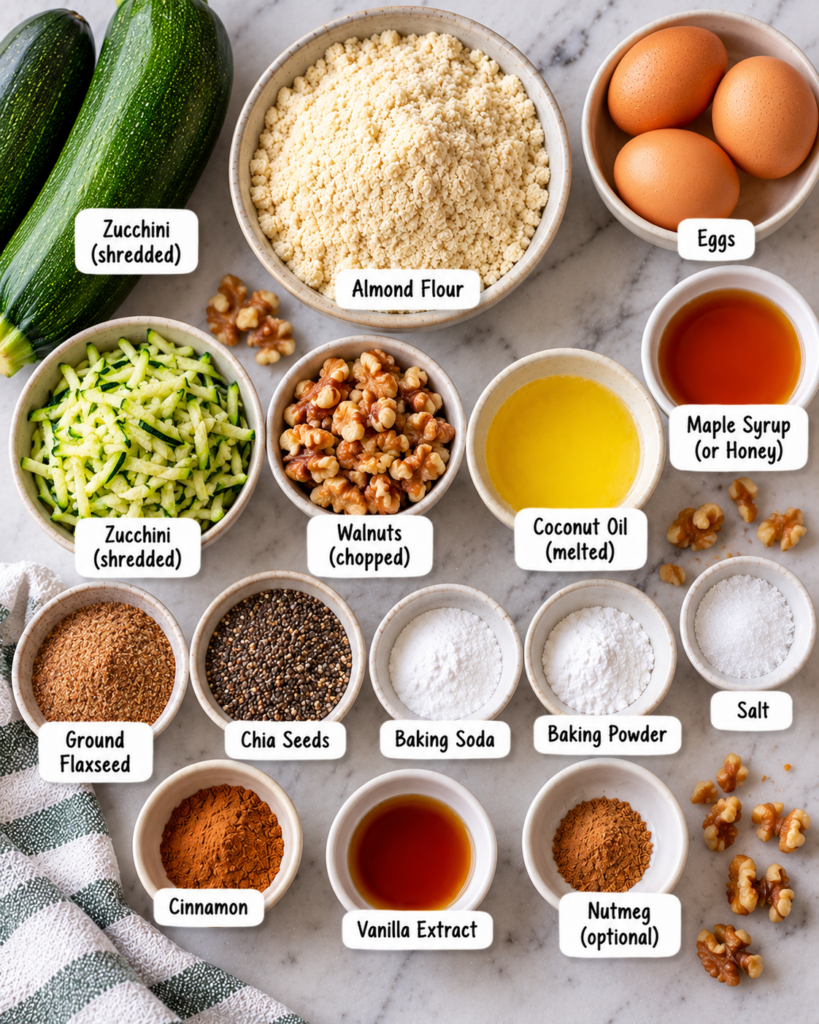
- 1 medium Zucchini, grated Choose small, fresh zucchini for best results.
- 3 large Eggs Large eggs help bind the ingredients together.
- 1/4 cup Honey or maple syrup For natural sweetening.
- 1/2 cup Coconut oil, melted Can substitute with other oils.
Dry Ingredients
- 2 cups Almond flour Provides a moist crumb.
- 1/4 cup Coconut flour Highly absorbent; use carefully.
- 1 tsp Baking soda For leavening.
- 1 tsp Ground cinnamon Adds warm spice flavor.
- 1/2 tsp Salt Enhances flavor.
Instructions
Preparation
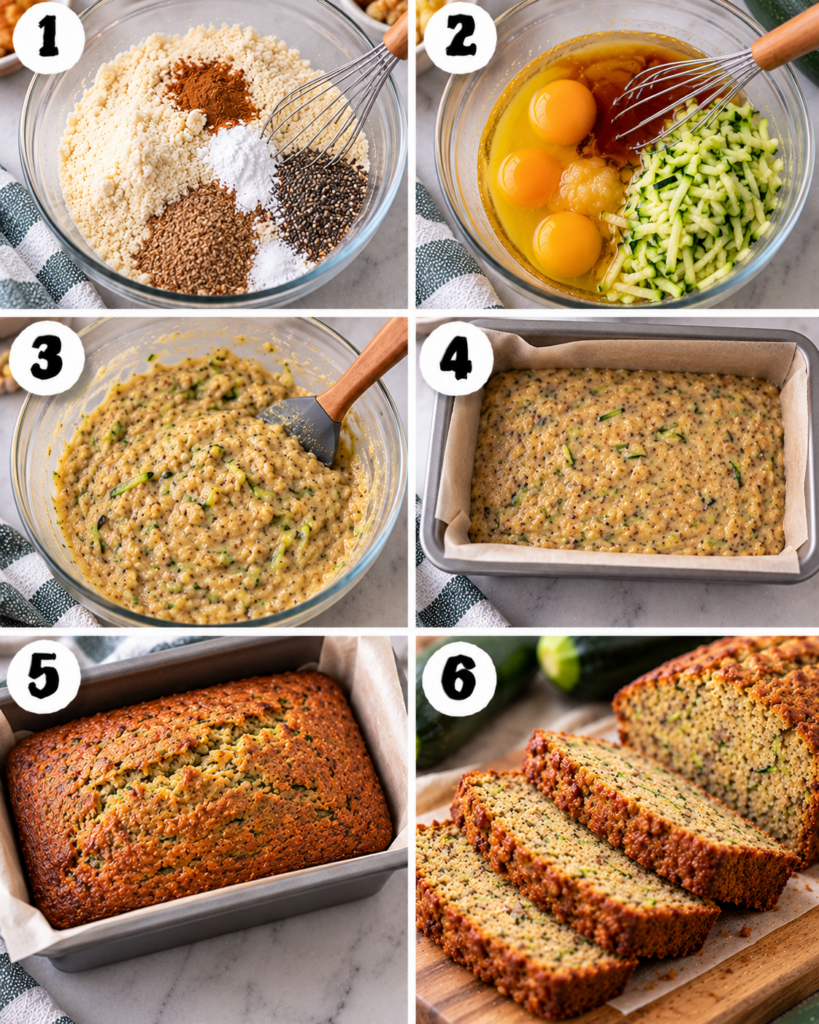
- Preheat the oven to 350°F (175°C) and lightly grease a loaf pan.
- Grate the zucchini and place it in a clean towel to squeeze out excess moisture.
Mixing Ingredients
- In a large bowl, combine the eggs, honey or maple syrup, and melted coconut oil.
- Stir in the grated zucchini until well mixed.
- In a separate bowl, mix the almond flour, coconut flour, baking soda, cinnamon, and salt.
- Gradually add the dry ingredients to the wet ingredients, stirring until just combined.
Baking
- Pour the batter into the prepared loaf pan and smooth the top.
- Bake for 45-55 minutes, or until a toothpick inserted in the center comes out clean.
Cooling
- Allow the zucchini bread to cool in the pan for 10 minutes before transferring it to a wire rack.
- Let it cool completely before slicing.