
Gluten-Free Cinnamon Rolls (Soft and Homemade)

There are few things that make a kitchen feel more welcome than the smell of cinnamon rolls. That warm cinnamon smell and soft sweet middle are exactly what people are looking for, whether they are baking for a holiday breakfast or a quiet weekend morning.
Gluten-free cinnamon rolls can be just as comforting, but the dough behaves differently than traditional wheat dough. A good gluten free cinnamon rolls recipe needs enough structure to hold its shape, but be soft and tender after baking.
The best finished rolls should not be gritty, too dense, or dry at the edges. They should have a nice crumb and enough cinnamon flavour to make each bite enjoyable.
What’s Different About Gluten-Free Cinnamon Rolls?
The proteins in wheat flour form gluten , which gives traditional dough its elasticity and structure . Gluten-free dough doesn’t develop that same network, so the texture and handling can be noticeably different.
That difference doesn’t mean the rolls have to be a let-down. A good gluten-free recipe will give you a soft, pleasant product, but it may not feel exactly like a cinnamon roll from a normal bakery.
What Makes Gluten-Free Dough Different
Some gluten-free doughs are softer and more sticky than wheat dough. Others depend on binders to help keep their shape.
The original recipe defines what a normal texture should be. A dough that feels strange isn’t necessarily proof something went wrong.
Selecting a Gluten Free Flour Blend
Not all gluten free flours are created equal. Rice flour, almond flour, oat flour and commercial gluten-free blends all behave differently.
A single flour is formulated differently from a one-to-one gluten-free blend. Even two commercial blends can give different results as they have different starches and binders.
Why Flour Blends Are Important
A well-rounded blend can add structure and tenderness. An ill-fitting substitute can cause the rolls to be crumbly, gummy or unusually heavy.
The safest reference is the flour on the recipe card to get the result you want.
But What About Xanthan Gum?
Some gluten-free blends already include xanthan gum or another binder. Other recipes use another binding ingredient.
Don’t assume you need more xanthan gum without checking the original recipe.
Getting a Tender, Soft Texture
Softness is one of the most important things to look for in homemade cinnamon rolls. The finished crumb should be tender enough to pull apart comfortably, but not gummy.
Gluten-free baked goods can dry out in a different way than wheat-based ones. The feel of the rolls after they are cooled will depend a great deal on the balance of ingredients in the recipe.
Keep Edges from Drying Out
If the centres are soft, the dry edges can make the cinnamon rolls less enjoyable. The perfect roll will have a good texture all the way through.
No More Gummy Centres
A gummy centre can feel heavy and undercooked, not soft. A little moisture is desired, but the roll should be built as the recipe intends when finished.
Working with gluten free dough
Gluten-free dough may not stretch as easily as regular cinnamon roll dough. That can change its appearance and make it more delicate.
The best result doesn’t have to look like a wheat roll before it goes in the oven. What matters is that the texture at the end corresponds to what was tested in the recipe.
Why Rolls Crack
If the dough is not flexible enough to hold a nice spiral, it may crack. This is thanks to the mix of flours and the overall dough structure.
Little flaws in aesthetics do not always affect the taste.
Cinnamon Filling and Frosting Options
These rolls are all about the cinnamon flavour, which adds a familiar warmth to the rolls, making them especially appealing for breakfast or brunch.
Some recipes use icing or cream cheese frosting and others are served more simply. Please confirm those details in the recipe card.
Cream Cheese Icing
A popular choice is cream cheese frosting, as it’s tangy and goes well with sweet cinnamon rolls. It is not inherently in every gluten-free cinnamon rolls recipe.
Basic Frosting
A lighter icing can add sweetness without the richness of cream cheese frosting. The choice depends on the finished rolls and personal preference.
Troubleshooting Common Problems
Cinnamon Rolls (Dense)
If the flour blend or the dough structure doesn’t create the softness you want, you might end up with heavy rolls. Non-yeast and yeast-based recipes also act differently.
Dried Rolls
Dryness can be more visible after storage. Gluten-free rolls can change texture as they cool, so proper storage is important.
Crumbles consistency
A roll that falls apart may not have the structure you expect from the recipe. The specific combination of flours and binding ingredients affects this.
Make-Ahead, Freezing, & Reheating
Gluten free cinnamon rolls are best eaten fresh, as they can become a little firmer when stored. Store cooled rolls covered as directed in recipe.
Refrigerate rolls with perishable frosting immediately. Most cinnamon rolls are freezable right after baking, though they might have a different texture after thawing.
A yeast recipe will have different make-ahead requirements than a quick, non-yeast recipe.

Frequently asked questions
Almond Flour in Place of Gluten-Free Blend?
Not as a direct sub unless the recipe has been tested that way. Almond flour acts very differently than commercial gluten-free flour blends.
Why Are My Gluten-Free Cinnamon Rolls Dense?
Density can be affected by the flour blend, binding ingredients and the leavening system of the recipe. The desired texture should be considered in relation to the specific recipe.
Are Gluten-Free Cinnamon Rolls Yeast-Free?
Some recipes use yeast and others another method for leavening. Gluten free does not mean yeast free.
Can You Freeze Cinnamon Rolls That Are Already Baked?
Many baked recipes freeze well when properly wrapped. You might see some texture changes after thawing, especially for delicate gluten-free crumbs.
Concluding Thoughts
Gluten-Free Cinnamon Rolls can be just as comforting as the beloved breakfast treat they are inspired by. The important things are a soft crumb, a good cinnamon flavour, and a texture that holds together but isn’t heavy.
With the right recipe, they’re a lovely addition to weekend breakfasts, holiday brunches, and special mornings at home.

Gluten-Free Cinnamon Rolls
Ingredients
For the Dough
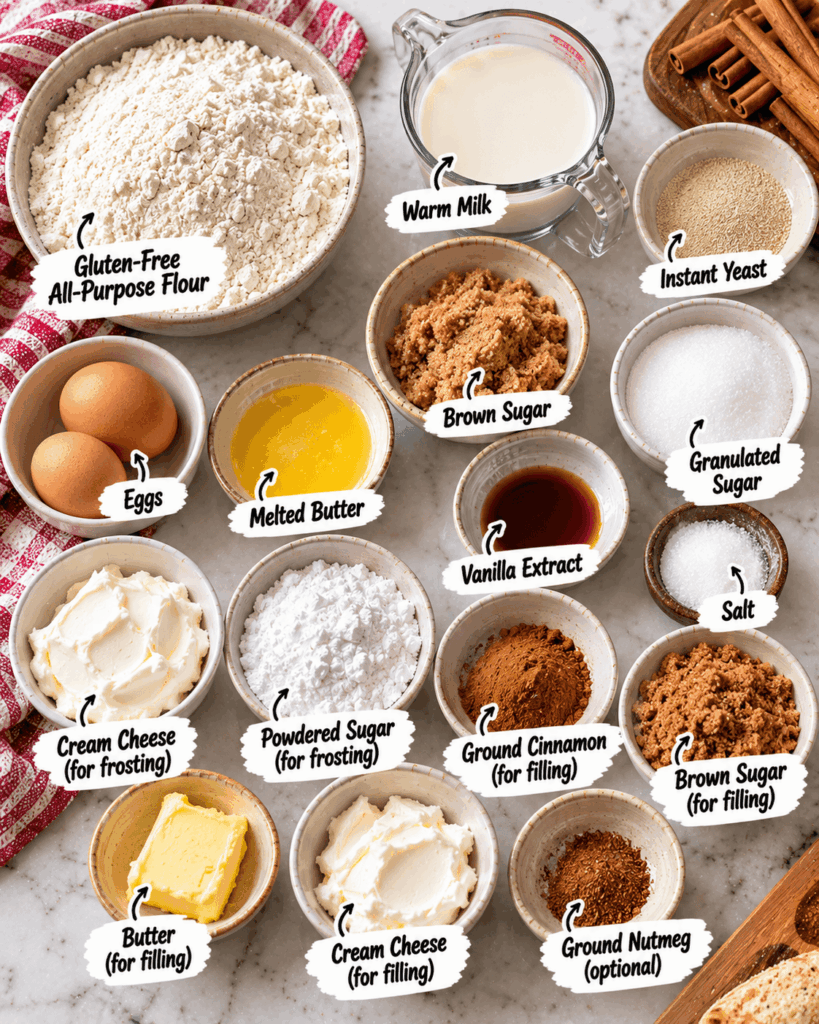
- 3 cups gluten-free flour blend Ensure it’s a one-to-one blend for best results.
- 1 tsp xanthan gum Only if your flour blend does not contain it.
- 1 tbsp baking powder For leavening the rolls.
- 1/2 cup milk Use dairy or plant-based milk.
- 1/4 cup sugar Adjust sweetness to taste.
- 1 large egg Or flax egg for vegan option.
- 1/4 cup melted butter Can substitute with coconut oil for dairy-free.
For the Cinnamon Filling
- 1/2 cup brown sugar For a deep caramel flavor.
- 2 tbsp cinnamon Adjust to taste.
- 1/4 cup butter Softened, for spreading.
For the Frosting (Optional)
- 4 oz cream cheese Softened for easy mixing.
- 1 cup powdered sugar For sweetness.
- 1 tbsp vanilla extract Adds flavor to the frosting.
Instructions
Preparation
- Preheat the oven to 350°F (175°C).
- In a large bowl, combine the gluten-free flour blend, xanthan gum, and baking powder.
- In another bowl, mix the wet ingredients: milk, sugar, egg, and melted butter until well combined.
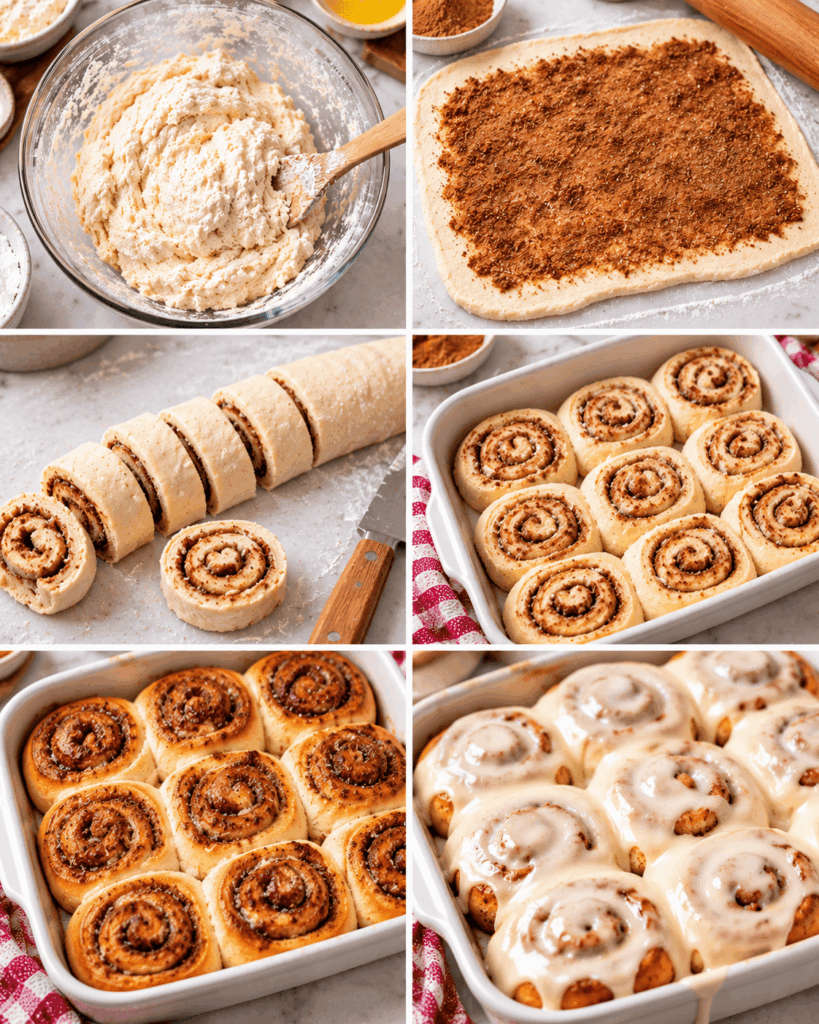
- Add the wet ingredients to the dry ingredients and mix until just combined. The dough should be soft but not too sticky.
Making the Rolls
- Roll out the dough on a lightly floured surface into a rectangle.
- Spread the softened butter for the filling onto the rolled dough.
- Sprinkle the brown sugar and cinnamon mixture evenly over the butter.
- Starting from one long edge, roll the dough tightly into a log.
- Cut the log into 12 equal pieces and place them in a greased baking dish.
Baking
- Bake the cinnamon rolls in the preheated oven for 20-25 minutes or until golden brown.
- While they are baking, prepare the frosting by mixing together cream cheese, powdered sugar, and vanilla extract.
- Once the rolls are finished baking, let them cool slightly before drizzling with frosting if desired.