
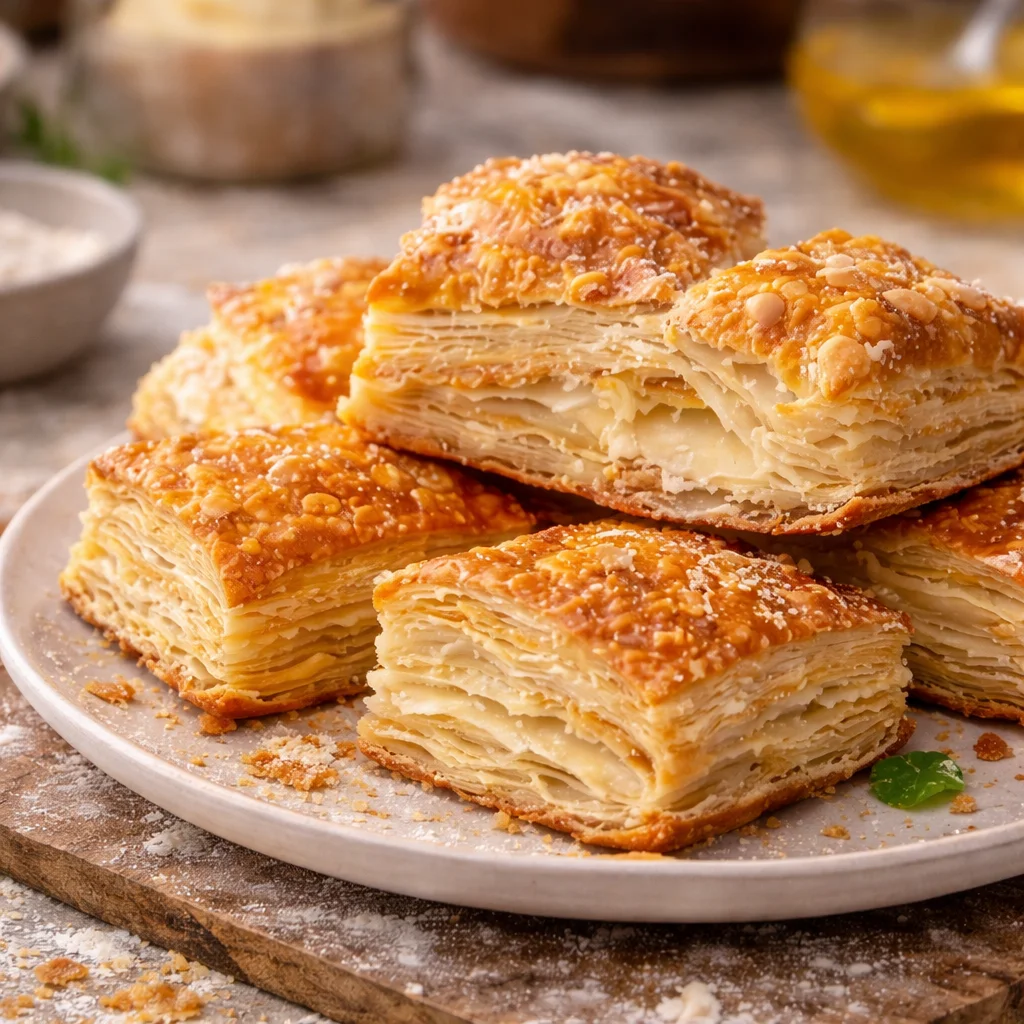
Classic Homemade Puff Pastry is one of those things that sounds fancy until you actually make it and realize it is mostly just butter, flour, and a little patience. If you have ever stood in the freezer aisle wondering if the store bought sheets will taste “good enough,” I get it. I used to buy it every time, then I finally tried making it at home on a rainy weekend and I was hooked. The layers bake up crisp, the flavor is buttery in a way the boxed stuff never quite nails, and it makes your kitchen smell like a real bakery. I am going to walk you through it in a simple, no stress way.
What is Puff Pastry?
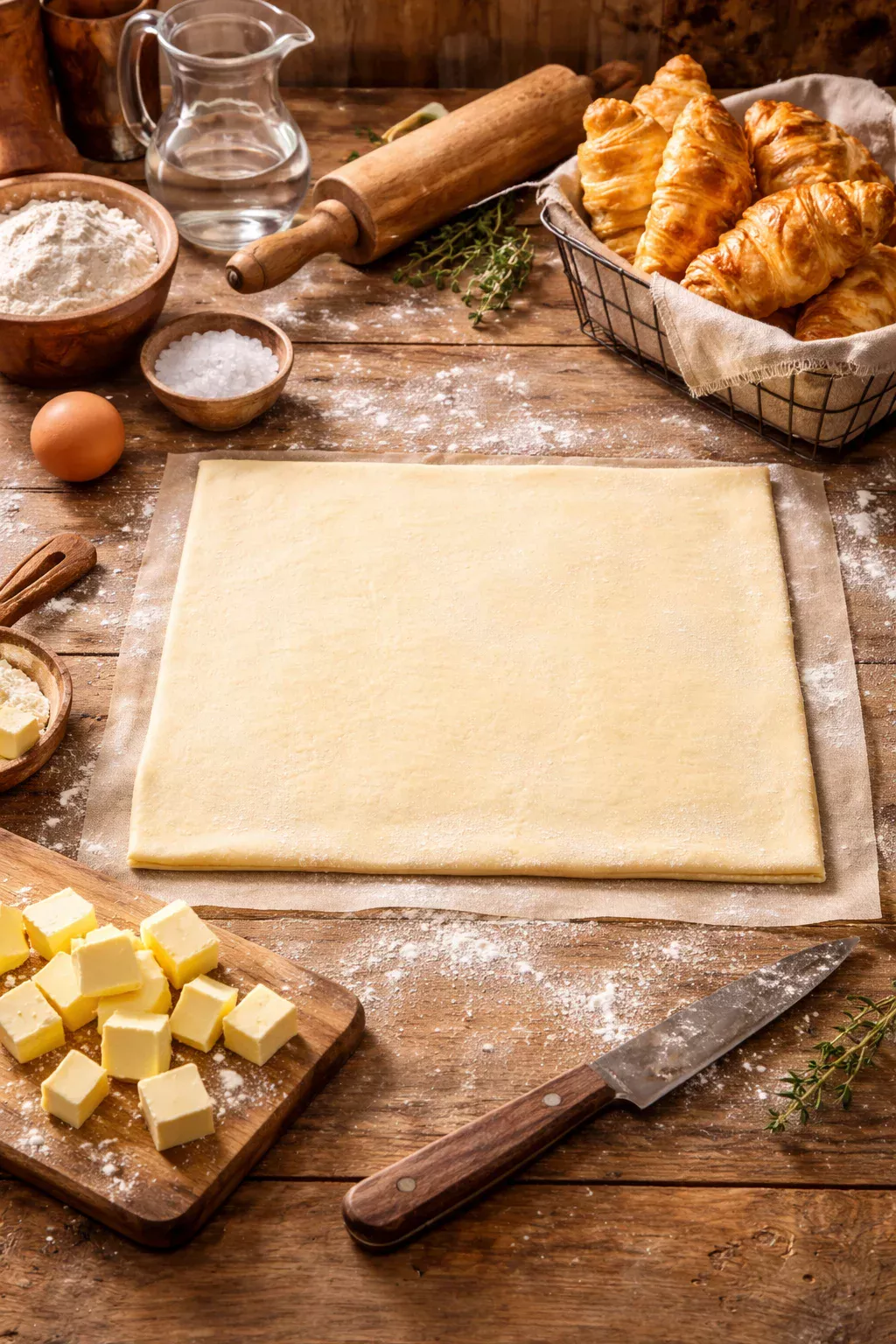
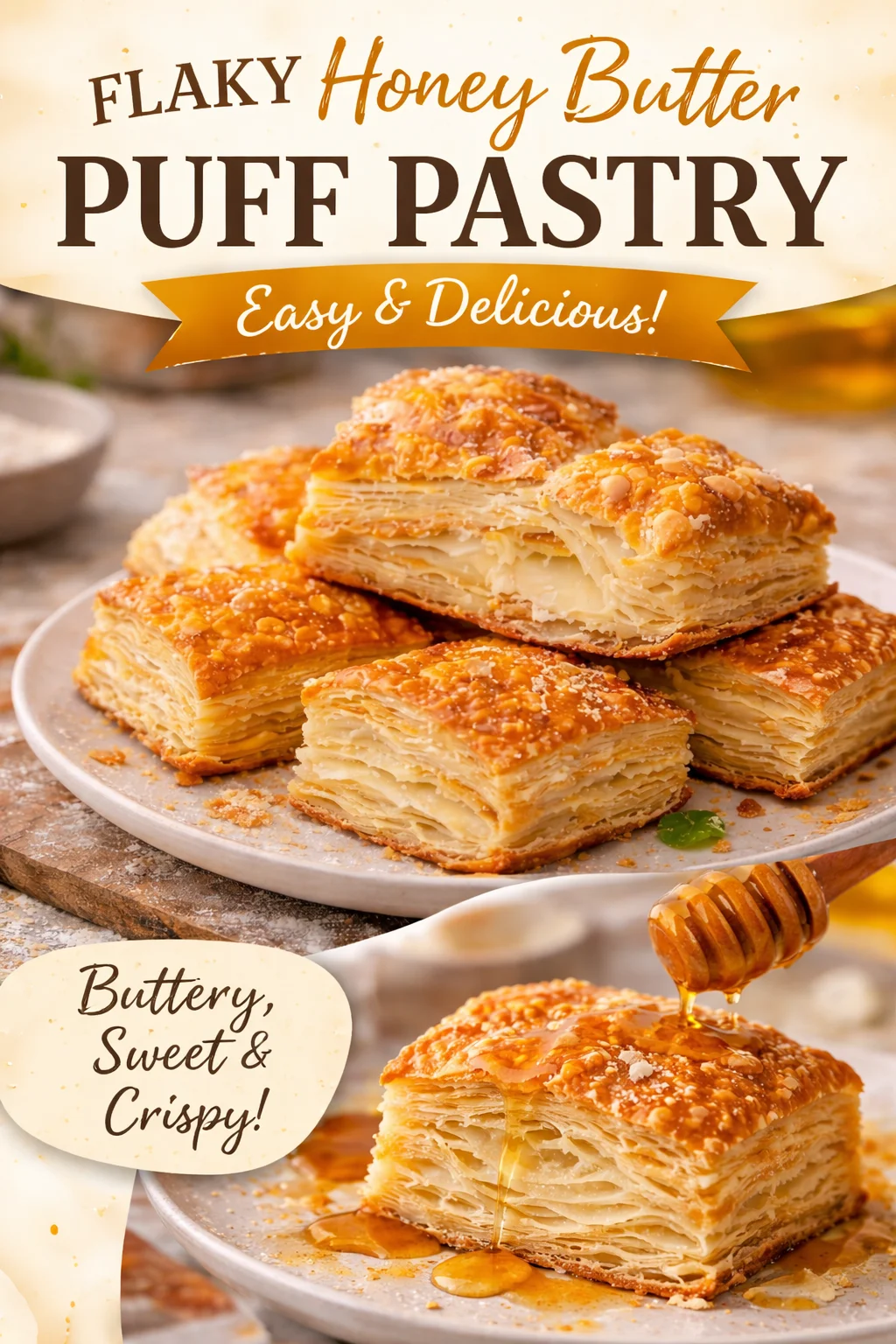
Puff pastry is a flaky dough made by folding butter into dough over and over, so it creates lots of thin layers. When it hits the oven, the water in the butter turns into steam and pushes those layers apart. That is what gives you that dramatic rise and crunch.
It is different from pie dough, which is tender and crumbly, and it is also different from phyllo, which is paper thin sheets you layer with butter. If you have ever tried homemade phyllo, it is its own fun project, and I have a full post on it here: homemade phyllo dough baklava sheets. Puff pastry is more of a fold and chill rhythm, and once you get the hang of it, it feels pretty relaxing.
I like to think of puff pastry as a “blank canvas” dough. Sweet, savory, breakfast, party snacks, you name it. One week I will wrap brie and cranberries for an easy appetizer, and the next week I will make something playful like these carrot shaped puff pastry for a spring table.
Why You’ll Love This Recipe
First off, the flavor. When you make Classic Homemade Puff Pastry yourself, you control the butter, the salt, and the freshness. It bakes up with that shattery, crisp top and a soft, honeycombed inside that feels like it came from a real pastry case.
Second, it is not hard, it is just timed. You do a little mixing, a little rolling, then you let the fridge do the heavy lifting. I like recipes like that because I can fold laundry, answer emails, or just sit down with coffee between steps.
Third, it makes you feel wildly capable. The first time I pulled a tray out of the oven and saw the layers puff, I actually laughed out loud. Also, homemade puff pastry freezes beautifully, so you can make it once and enjoy it for weeks.
“I was nervous about making puff pastry, but your step by step made it feel doable. Mine came out super flaky, and I used it for a quick brunch tart. Never going back to store bought.”
And if you are already thinking about what to bake with it, one of my favorite combos is a cozy appetizer situation like flaky puff pastry with brie cranberries toasted walnuts. It is the kind of thing that disappears fast at parties.
Ingredients and Substitutes
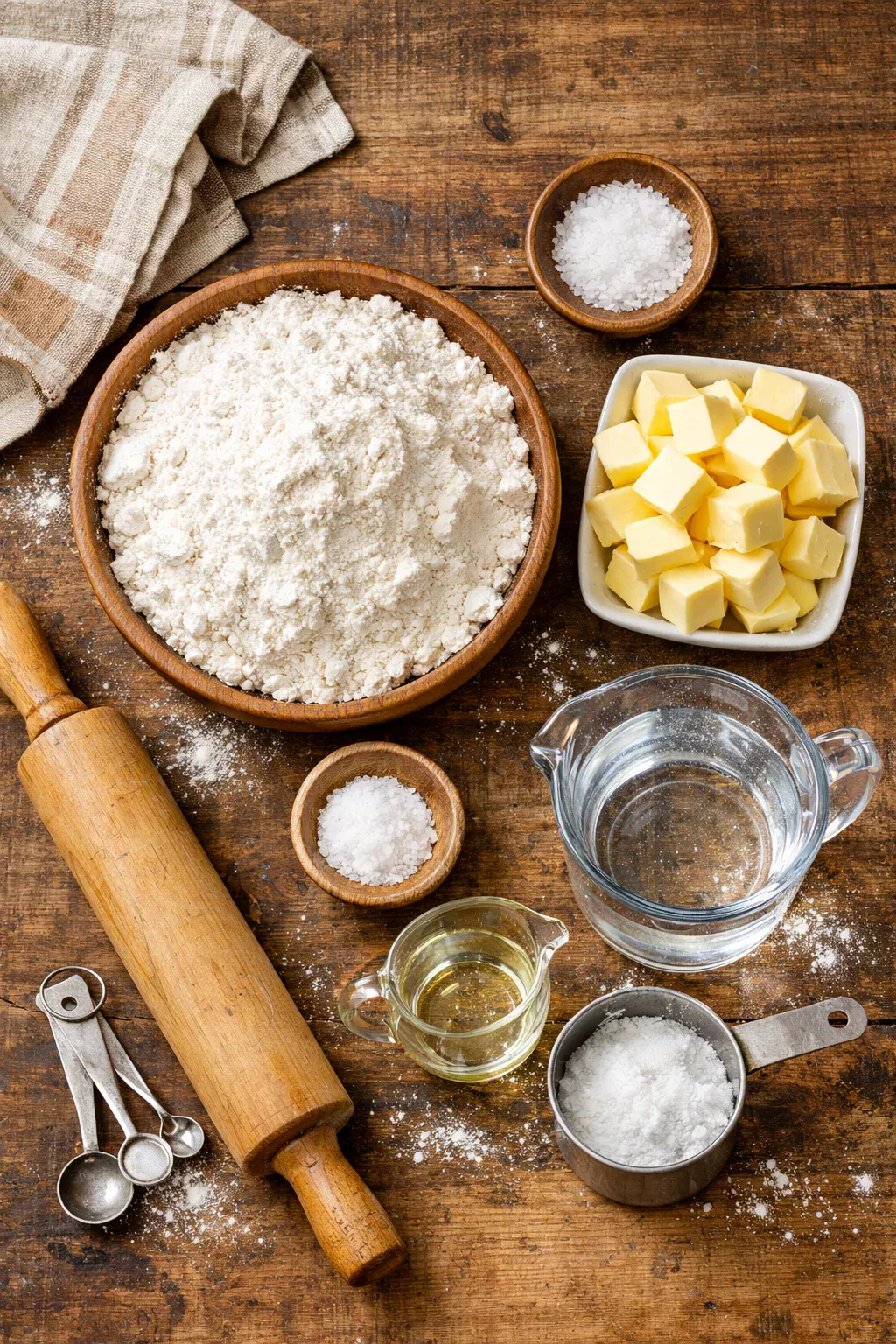
You only need a few basics, but the quality matters. If you can, use good butter. This is one of those recipes where the butter is the star.
- All purpose flour (you can use bread flour for a slightly chewier structure, but all purpose is easiest)
- Salt (do not skip it, it keeps the flavor from tasting flat)
- Cold unsalted butter (European style butter is amazing here, but any good brand works)
- Cold water (ice cold helps keep the butter from melting)
- Optional lemon juice or a tiny splash of vinegar (not for flavor, it can help relax the dough a bit)
Butter substitute? This is the one place I do not recommend swapping. Margarine or shortening will change the flavor and the way it puffs. If you need a dairy free version, use a plant based butter made for baking and keep everything extra cold, but results vary by brand.
Flour swaps? If you are gluten free, puff pastry gets tricky because gluten is what helps trap those layers. I would not do a straight swap here. If you want a homemade snack that is naturally easier to make gluten free, try these easy delicious homemade gluten free granola bars instead, then come back to puff pastry when you are ready for the classic version.
Step-by-Step: How to Make Traditional Puff Pastry
This is the part that looks intimidating, but I promise it is just repeating the same simple move. The biggest rule is: keep it cold. If the butter starts feeling soft or oily, stop and chill.
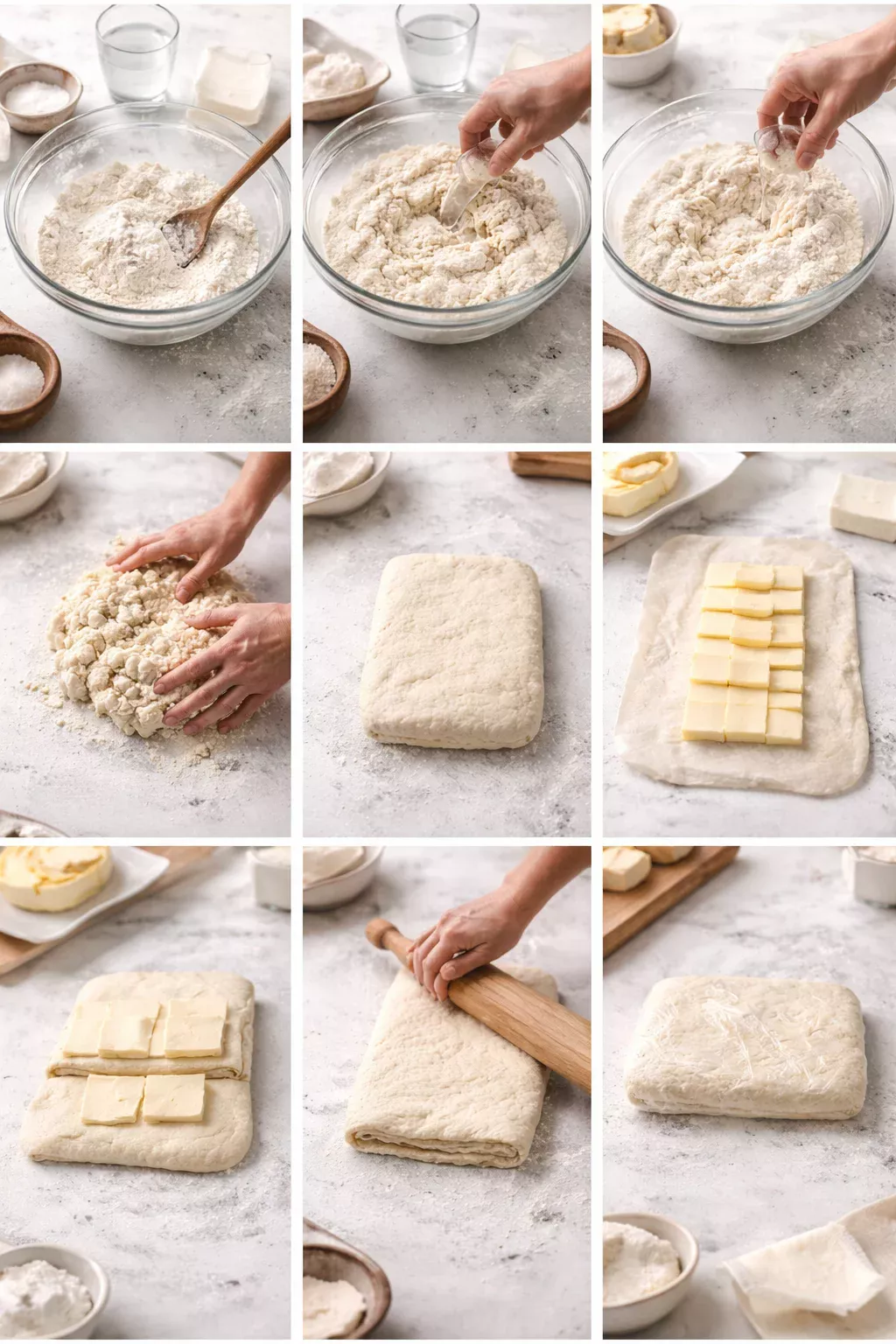
1) Make the dough base
In a bowl, mix flour and salt. Add cold water a bit at a time and stir until you get a shaggy dough. It should look rough but hold together when you squeeze it. If it is dry, add a teaspoon more water. If it is sticky, dust with a little flour.
Turn it onto the counter and press it together gently, do not knead it like bread. Shape into a small rectangle, wrap, and chill about 20 to 30 minutes.
2) Prep the butter block
While the dough chills, take your cold butter and shape it into a flat rectangle. I usually place it between two pieces of parchment and tap it with a rolling pin until it is an even slab. You want it firm but workable, not rock hard and not squishy.
3) Wrap butter inside the dough
Roll your chilled dough into a rectangle that is a bit bigger than your butter block. Place the butter in the center and fold the dough over it like you are wrapping a present. Pinch the seams so the butter is fully enclosed.
4) Do the folds (this is where the layers happen)
Lightly flour your counter and roll the dough into a long rectangle. Then fold it into thirds like a letter. That is your first fold.
Turn the dough 90 degrees, roll again into a long rectangle, and fold into thirds again. That is your second fold. Wrap and chill for 30 to 45 minutes.
Repeat this roll and fold process until you have done about 5 to 6 folds total, chilling when needed. If you ever see butter breaking through, sprinkle a bit of flour on that spot, patch it gently, and chill.
5) Rest, then use it
After the last fold, chill the dough at least 1 hour before using. Overnight is even better if you have time. Now you have Classic Homemade Puff Pastry ready for pinwheels, turnovers, pot pie tops, or fancy little tarts.
When you bake, a hot oven helps it puff. Most puff pastry bakes best around 400 to 425 F, depending on the filling. Also, do not crush the edges when cutting. Use a sharp knife or pizza wheel and press straight down so the layers stay open.
Tips for Success
This is the stuff I wish someone had told me the first time, before I made a buttery mess on my counter.
Keep everything cold. If your kitchen is warm, chill your rolling pin and even your flour bowl. Not kidding. Warm butter is the enemy of flakes.
Do not rush the chill time. The fridge is what keeps the butter in distinct layers. If you skip chilling, the butter smears into the dough and you lose lift.
Use light flour when rolling. Too much extra flour makes the dough tough and a little dry. Dust lightly and brush off excess.
Roll gently. You are stretching dough, not crushing it. If you press too hard, you can break the layers.
Plan your baking. Puff pastry loves a hot oven and space between pieces. Crowding a tray can make it bake unevenly.
Freezing tip. You can freeze the finished dough wrapped well for up to 2 months. Thaw overnight in the fridge, not on the counter.
Common Questions
Can I make it in one day?
Yes. Set aside a relaxed afternoon. You will be folding, chilling, and folding again. Most of the time is hands off.
Why did my butter leak out in the oven?
Usually the dough got too warm during rolling, or the edges were not sealed well. Chill longer between folds, and avoid stretching the dough so thin that it tears.
How thick should I roll it before baking?
For most recipes, about 1/8 to 1/4 inch works. Thicker gives taller layers, thinner gets crisper. If you are making little twists or straws, thinner is great.
How do I store baked puff pastry?
Keep it loosely covered at room temp for a day, or refrigerate if it has dairy fillings. To re crisp, warm it in the oven for a few minutes. The microwave makes it soft.
Can I use this for sweet and savory recipes?
Absolutely. That is the magic. One day it is dessert turnovers, the next day it is a cheesy snack. I even like using it for fun party food nights alongside things like delicious homemade pizza rolls in the air fryer.
A buttery ending and a little pep talk
If you take one thing from this post, let it be this: Classic Homemade Puff Pastry is totally doable at home, even if you are not a pastry person. Keep it cold, be patient with the folds, and you will get those gorgeous layers. If you want another trusted perspective, you can also compare methods from Quick & Easy Homemade Puff Pastry – Authentic Italian Recipes and Easy Homemade Puff Pastry Recipe – Baking A Moment. Now go clear a little fridge space, grab your butter, and make it once for the bragging rights alone.
Classic Homemade Puff Pastry
Ingredients
Dough Ingredients
- 2 cups All purpose flour Can substitute with bread flour for chewier structure.
- 1/2 teaspoon Salt Don’t skip to avoid flat flavor.
- 1/2 cup Cold unsalted butter Use good quality or European style for best results.
- 1/2 cup Cold water Ice cold helps prevent butter from melting.
- 1 tablespoon Lemon juice or vinegar (optional) Helps relax the dough.
Instructions
Preparation of Dough
- In a bowl, mix flour and salt.
- Add cold water a bit at a time and stir until you get a shaggy dough.
- Turn it onto the counter and press it together gently into a small rectangle. Wrap and chill for 20 to 30 minutes.
Butter Preparation
- While the dough chills, shape the cold butter into a flat rectangle between two pieces of parchment.
Folding Technique
- Roll the chilled dough into a rectangle bigger than the butter block. Place the butter in the center and wrap the dough around it.
- Roll the dough into a long rectangle, fold into thirds, and repeat for a total of 5-6 folds, chilling as necessary.
Finishing Touch
- Chill the dough for at least 1 hour before use.
